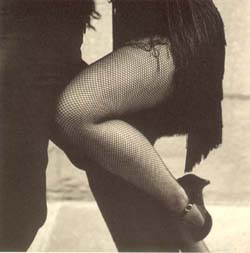
What Is Argentine Tango?
How Do I Get Started in Learning Argentine Tango?
How Do I Choose a Class or a Private Instructor?
How Long Will It Take to Learn Argentine Tango?
What About Workshops with Visiting Instructors?
Finding and Buying the Right Music
What Is a Milonga? What is a Practica?
How Is the Music Played at a Milonga?
What is the Basic Dance Floor Etiquette at a Milonga?
How Do I Ask for a Dance?
How Do I Say "No" to a Request to Dance?
What If Someone Just Won't Dance with Me?
What If I Don't Want to Dance in a Close Embrace?
How Do I End a Dance?
Courtesy at the Milonga
What about Safety?
What is Argentine Tango?
Argentine tango is a partnered social dance, in which the couple embraces to dance. It is different from ballroom dancing (including ballroom tango) in its posture, movement and intent. Unlike ballroom dances, which tend to be more structured, social tango is improvised, with every step being a spontaneous discovery in the moment, as the partners focus on their connections to each other and to the music.Although Argentine tango is generally confined to "regular" rhythms, it has an infinite variety of step patterns. Nonetheless, what makes tango isn't the steps but the manner in which the steps are danced. The connection between partners is not so much a result of anything in the dance as it is a requirement to dance successfully. In order to dance with every step spontaneously improvised, both partners must be paying full attention to each other.
How Do I Get Started in Learning Argentine Tango?
The way to get started in Argentine tango with the least committment is to attend a milonga or a practica, but some these events may be intimidating for those with little experience dancing Argentine tango. A better way is to contact one of the offering private instruction or classes in the your area. You can find information about tango instructors and their classes and private lessons throughout the world through our links from Tango Links webpage.How Do I Choose a Class or a Private Instructor?
Attending a class is an opportunity to see whether an instructor's approach is suitable for you.Before taking a private lesson, it is advisable to talk to as many instructors as possible. Ask them about their approach to teaching. Ask them for references. Ask dancers whose dancing skills you admire for their suggestions.
How Long Will It Take to Learn Argentine Tango?
The rate at which people learn Argentine tango varies greatly across individuals. Achieving a basic competence in dancing tango can take anywhere from several months to a year of weekly classes or private lessons. After most people have achieved a basic competency, they find a continued opportunity to refine and develop their dancing skills. Many people find that Argentine Tango offers a lifetime of learning, even after formal instruction has ended.What About Workshops with Visiting Instructors?
Several local organizers bring in touring instructors for weekend workshops to supplement the local instruction. Quite often these instructors are Argentine and highly regarded for their dancing and teaching skills. Most people find the additional insights offered by visiting instructors to be valuable. You may want to consult your own instructor or others in your community for recommendations about whether such instruction would be valuable in your learning process. You can find out more about workshops and festivals throughout the world through our links from Tango Links webpage.Finding and Buying the Right Music
Before you head to the store to buy some tango music to practice, you may want to consult your instructor or look through the Guides to Tango Music for Social Dancing on this website. Much of what is readily available in the stores isn't suitable for dancing Argentine tango. Much of it is for listening, and some of it is for ballroom tango.In many U.S. cities, you may be able to buy a few of the recommended CDs at Barnes and Noble. A large independent CD store, such as Waterloo Records in Austin, TX or Amoeba Records in San Francisco, CA, is a much better bet. The best options are online or telephone ordering through TangoCD.com or Zival's TangoStore.
What Is a Milonga? What Is a Practica?
A milonga is an Argentine Tango social dance. People come as individuals or with a partner. The dance music will consist of tango, vals and milonga. Each is a different dance form within the family of Argentine tango.The music is typically played in tandas (sets) with three or four songs per tanda. By custom, the music within a given tanda will be of the same genre. Between tandas, there are short interludes of non-tango music known as cortinas. The cortina is a customary time to change partners.
A practica is an informal event where one can practice how to dance at a milonga. The floorcraft and music protocols for practicas are relaxed. Specifically, it is okay to impede the flow along the line of dance within reason to work on a particular movement. It is also okay to stop and discuss what is and isn't working—to the limits your partner accepts. In addition, the music probably won't be played in tandas with cortinas.
How Is the Music Played at a Milonga?
Tandas: At many milongas, the deejay plays music in sets (called tandas) of 3 or 4 songs by the same orchestra from the same period. Generally, the tandas are played in a repeating cycle of two tandas with four tangos each, one tanda with three to four valses, two tandas with four tangos each, and one tanda with three to four milongas. The cycles may be shortened to or early in the evening by dropping one or two tandas of tango. Alternative or neotango music may be substituted for a tanda with the same rhythmic feel. Some deejays include non-tango dance music, such as salsa or swing, in their rotation. You can turn the predictability of the cycle to your advantage by planning ahead for dance partners.Cortinas: At many milongas, the deejay plays a cortina between tandas. A cortina is a short piece (about 30 seconds) of non-tango music that tells the dancers the tanda is over and a new tanda is about to begin. The next tanda will be a different style of music and is normally danced with a new partner. The beauty of cortinas in Buenos Aires is that absolutely everybody thanks their partner and leaves the dance floor. This means that you can now choose from among everybody present in the room who you will dance with next, instead of limiting yourself to whoever is sitting, or by trying to predict (while sitting or dancing) when your favorite partner will become available for you.
If a crowd isn't familiar with cortinas, they may stand there on the floor with their partner, looking doubtful about the danceability of what the deejay just started playing. Worse, they may try to dance to the cortina. In Buenos Aires, dancing to cortinas will brand you as a barbarian. Around here, it's just an awkward moment.
What is the Basic Dance Floor Etiquette at a Milonga?
Tango, vals and milonga flow in a counter-clockwise direction around the room. Dancers should move with the counter-clockwise direction, flow and spacing of the line of dance. On a crowded floor, it is preferrable not to pass other couples, not to take steps against the line of dance, nor to allow a big gap to open up in front of you.It is customary not to teach or practice on the dance floor during a milonga (a dance party). Leave the dance floor and teach or practice elsewhere. Of course, practicas are the ideal place to work on technique. It is very inappropriate to start critiquing or correcting your dance partner's technique at a milonga.
Moving onto the dance floor while a song is already underway is like merging onto the freeway during rush hour; wait for an open space, rather than forcing your way into the line of dancers.
How Do I Ask for a Dance?
In Argentina, there is a charming, face-saving convention to ask for a dance (that is used in many other tango communities). The asker makes eye contact with the person they wish to ask to dance, and raises the eyebrows, nods a yes with slight downward head movement, and/or makes a subtle head nod toward the dance floor. The responder answers "yes" by smiling and nodding back, or "no" by refusing further eye contact. Attempting to steal an eye contact is poor form.In many U.S. cities, you also can ask the American way: "Would you like to dance?"
It's okay for either gender to ask someone for a dance, particularly if they eye-contact method is used.
Always wait to ask until your potential partner has come off the dance floor.
How Do I Say "No" to a Request to Dance?
If you refuse to make eye contact, the potential asker may realize that you do not want to dance. Briefly making and breaking eye contact also works.If asked verbally, say "No, thank you," with or without a smile.
You may offer a courteous excuse to soften the refusal. For example: "I am resting/would rather not dance to this music/want to finish this conversation."
If you are hoping to dance with this partner some other time, be sure to say so.
You have the right to refuse to dance, with anyone, at any time (even if you are already dancing together).
What If Someone Just Won’t Dance with Me?
Certain people will never dance with certain people. Don’t take it personally or get worked up over it. Nobody has an obligation to dance with everybody. Dancing Argentine tango is very much a consensual privilege and not a moral duty. To get more dances with more people, try introducing yourself, being friendly, saying hello to everybody, and working hard on your dance skills.What If I Don't Want to Dance in a Close Embrace?
It is rude to apply physical or verbal pressure to make someone dance in a close embrace.Either partner may state a preference for an open or close embrace—either verabally or by taking the embrace they prefer.
The wishes of the person who wants to use a more open embrace should be respected.
To avoid potential conflict or embarrassment, a person who asks someone to dance or accepts an invitation to dance should consider the embrace and style of dance that their prospective partner is most likely to prefer.
How Do I End a Dance?
To say "thank you" in a polite, reserved manner to your dance partner is an indirect way of saying, "I want to stop dancing." You may want to use other phrases of gratitude if you want to keep dancing.The cortina (the non-dance musical interlude between sets of 3 or 4 songs) is the customary opportunity to change partners in Argentina. In some communities, dancers may break after only a few songs.
It is appropriate to leave the floor after one song, or even in the middle of a song, if you are sufficiently uncomfortable with your partner's dancing or other behavior.
Courtesy at the Milonga
Chatting: Some people like to concentrate on the dancing while others chatter constantly. If you are one of the former, it’s perfectly OK to say, "Sorry, I find it hard to talk and concentrate on dancing at the same time." In general both conversation and dancing improve when not done simultaneously. You may notice that some of the more experienced dancers chat between songs and at the beginning of each song without taking up an embrace. Once they start dancing, they stop talking.Interrupting other people while they are dancing: Very simple. Don't—not even to say hello when you arrive or leave. If you must acknowledge someone, a quick nod or wave is the maximum. Imagine how you would feel if you are dancing with someone who is forced to stop to converse with another.
Personal hygiene: Please use anti-perspirant. Wear a clean shirt and bring a spare if you tend to get sweaty. If you attend a class, a practica or a milonga after a long day at work, please consider swinging by your house or the gym to take a shower and change clothes. If you use some fragrance, please use it sparingly. Some people have a problem getting up close and personal to heavy fragrance. Breath mints or gum are a good thing to use. If you have a cold, flu, or stomach bug, please stay home and get better before coming back to dance! Tango is guaranteed to pass your bug to several other people. Wash your hands or use Purell frequently.
What About Safety?
Everyone's safety is important to the tango community. Go to the host, teacher, and/or DJ with any social, etiquette or safety concerns, including sexually inappropriate behavior.You can ask a friend or the host for an escort to your car.
Be aware of your possessions. Don't take your valuables to tango events and leave them unattended.